40 Years of Teenage Mutant Ninja Turtles
Celebrating 40 years of the Teenage Mutant Ninja Turtles comic produced by Kevin Eastman and Peter Laird in 1984, it is impossible not to think about this unified body originating from paper and in a few years transferred to television, cinema, and video game formats, as a phenomenon of popular culture. Over these 40 years of branches and developments, the turtles have carried a charismatic image of superhero lore, reshaping themselves in various forms. The 1990s saw a remarkable projection: the era of superheroes sold in plastic figures, printed on shirts, rubber balls, stickers, movie tickets, and on the glittering screens of Konami’s arcade machines.
Pregnant with radioactivity, the mutant turtles with martial arts skills are distinguished by being named after important figures from the Italian Renaissance period. Raphael, Michelangelo, Leonardo, and Donatello gather in a New York City threatened by villains. It is in the city’s sewers, among the deep channels, that the mutant turtles listen to Splinter, their master.
Jump from Apple Arcade to Nintendo Switch
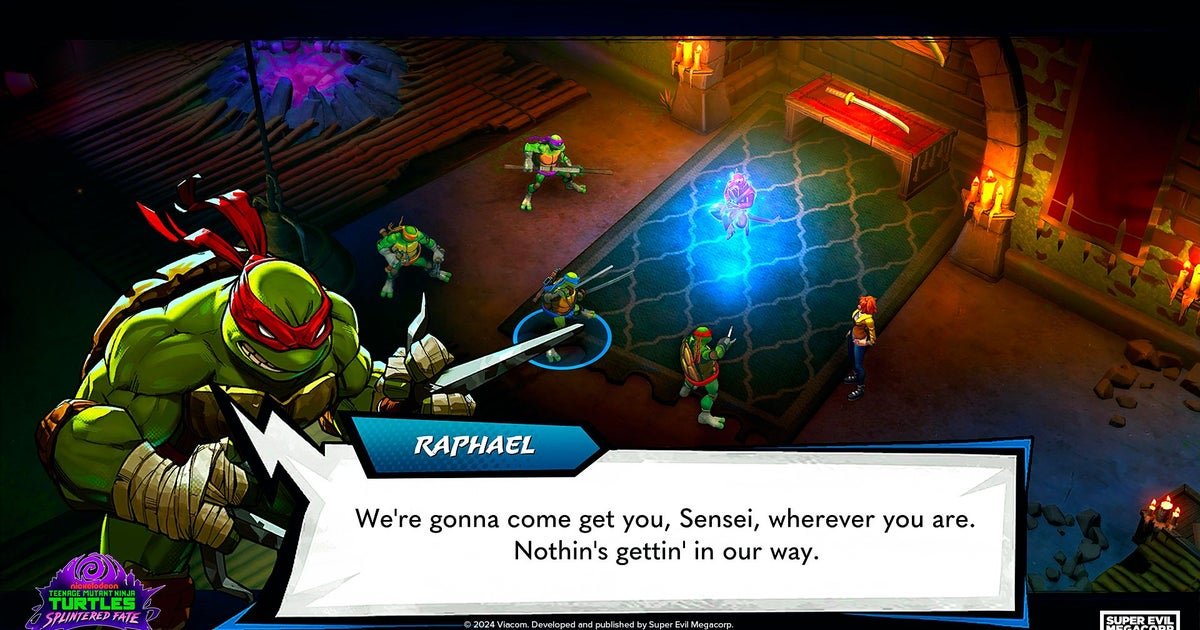
It is in direct confrontations on the streets, in the sewers, on top of buildings, among other locations, that the turtles collaborate and hone offensive and defensive combat techniques, neutralizing threats and villains coming from portals. Even though there is a noticeable departure from 2D side-scrolling action games, Teenage Mutant Ninja Turtles: Splintered Fate maintains the identity and much of the mechanical and visual concept of the early games in the series.
TMNT Splintered Fate is one of the games making its way to consoles – to the Nintendo Switch – after originally being released on the Apple Arcade platform. The game is a production of Super Evil Megacorp and can be played on the Switch through a collaboration with Nintendo. Under the Nickelodeon license, the studio materialized a concept and set of mechanics typical of a roguelike while successfully capturing the universe of the ninja turtles, serving the player with a carefully placed set of “easter eggs” at crucial moments in the narrative.
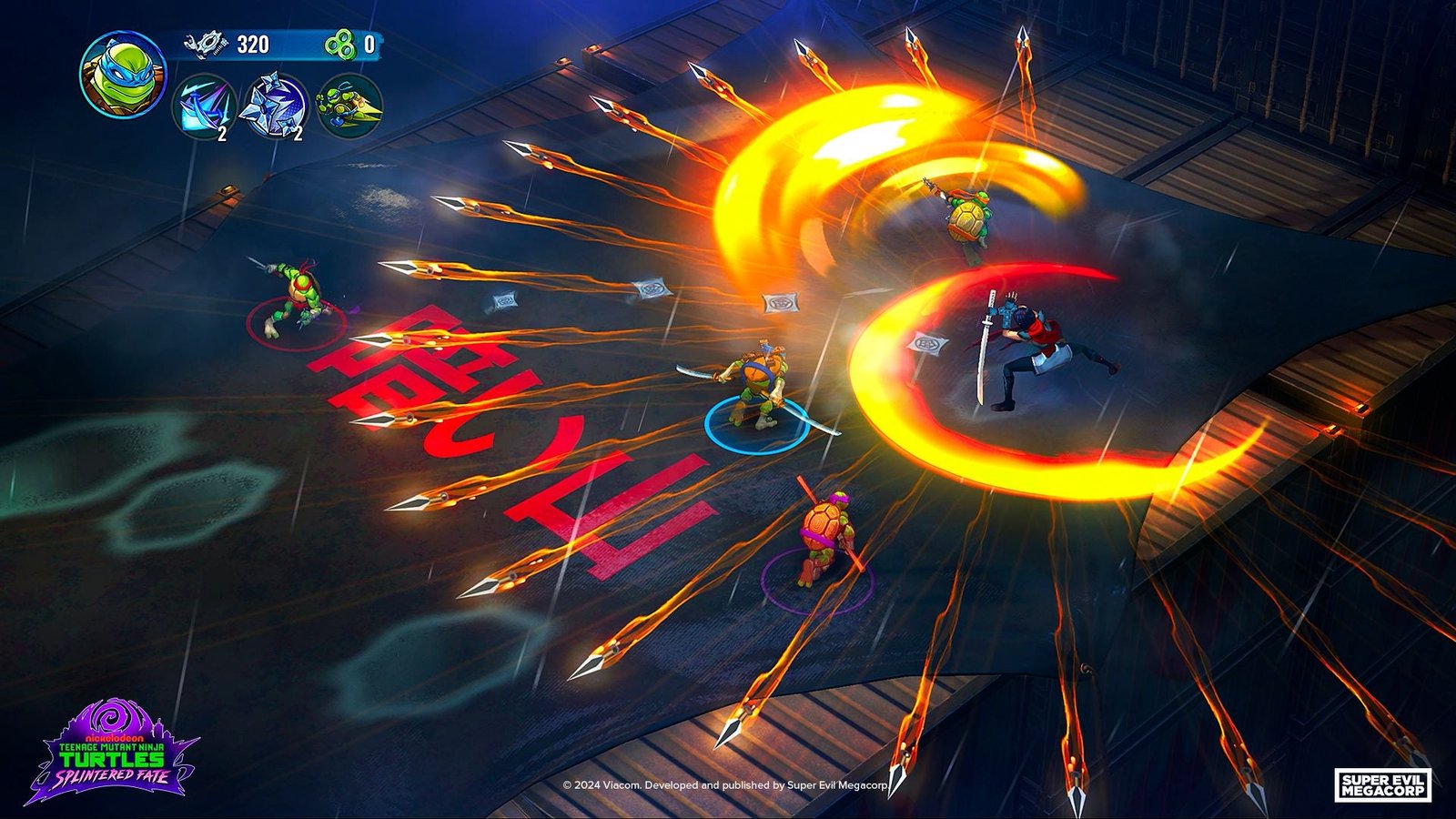
Complex Character Evolution System
As a roguelike, the concept of Splintered Fate is taken to the point of ensuring extensive customization of the chosen turtle. For example, Michelangelo has a great cover capacity in each area and deals more damage, while Leonardo is strong in damage and the smoothness of blows. Raphael is more apt to deal critical damage to enemies and Donatello, with a higher health reserve, focuses on utility. The pace of combat is fast and frenetic, with each turtle able to use a set of powers that can be used for periods of time, when on cooldown.
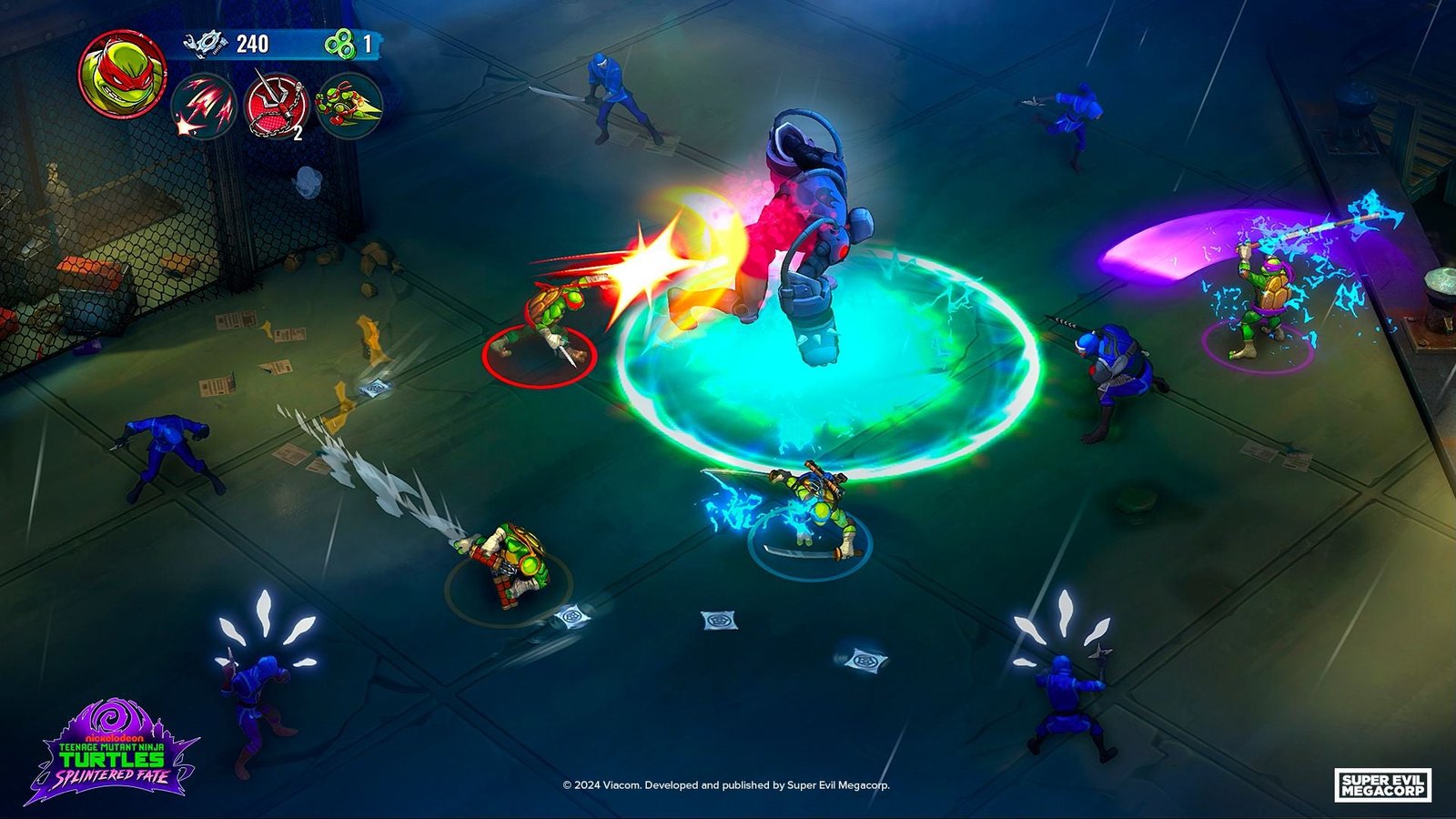
In a game that can be played solo or cooperatively with up to 4 players, the focus is on local multiplayer with a single Switch for four turtles simultaneously. While online rooms are an option for long-distance cooperative play (through invite only), matches on Switch with up to four players at the same time create a chaotic and empowering experience, sharing emotions in the same space.
With power-ups and bonuses changing in each match, lasting from twenty minutes to an hour, although the core mechanics remain the same, combat conditions in a match are never the same as the previous one. There is an element of unpredictability, a formula derived from the roguelike genre that Splintered Fate embodies through a sophisticated turtle customization system. In reality, no two matches are the same, yet the essence of the game remains. With a generous array of power-ups and bonuses, this TMNT game stands out from the typical turtle games. Additionally, it adapts well to the Switch, offering a seamless experience for both solo play and shared screen multiplayer with up to four players.
Pros and Cons
- Good capture of the TMNT universe and characters
- Combination of mechanics
- Fast-paced combat
- Co-op mode for up to 4 players on a single console
- Character-specific skill-building system
- Great artwork
- Portuguese language support
- Engaging combat mechanics
- Some limitations in accessing online matches
About the Author